Lawn Restoration in Cedar Rapids, Iowa
From thin, patchy turf to bare, damaged lawns — we assess the problem, prepare the soil, and get your lawn growing again.
Give Your Lawn a Fresh Start
Not every struggling lawn needs to be torn out and replaced. Many Cedar Rapids lawns that look beyond saving can be brought back with the right combination of soil preparation, seeding, and follow-up care — at a fraction of the cost of full replacement.
At High Definition Lawn Care, we start every restoration project with an honest assessment. We look at grass coverage, bare spots, soil condition, and the likely causes of damage before recommending a plan. Persistent problems — poor drainage, pest damage, disease, or soil that's simply not supporting growth — need to be identified and addressed before restoration work begins, or the same issues will come back.
We serve Cedar Rapids and surrounding communities with lawn restoration services tailored to the cool-season grasses common in eastern Iowa — Kentucky bluegrass, tall fescue, and perennial ryegrass.
Lawn Problems We Can Help With
Thin or Patchy Grass
Low-density turf that's lost its fullness over time due to age, shade, soil issues, or lack of maintenance.
Bare Spots and Dead Areas
Isolated or widespread areas where grass has died from pet damage, foot traffic, disease, or drought.
Soil Compaction
Hard, compacted soil that prevents roots from establishing and water from penetrating — common in high-traffic areas.
Drought and Heat Damage
Lawns that struggled through a dry Iowa summer and didn't recover on their own once conditions improved.
Worn-Out or Neglected Lawns
Lawns that have been under-maintained for years and need a full reset to get back to a healthy, even stand of grass.
Uneven Coverage and Poor Growth
Spotty, inconsistent turf with areas that never seem to fill in regardless of watering or fertilizing.
Our Lawn Restoration Services
Lawn Overseeding
Add grass seed to an existing lawn to improve density, fill thin areas, and encourage a fuller appearance — without replacing all existing turf. Best results when combined with aeration.
Aeration and Overseeding
Core aeration opens the soil and improves seed-to-soil contact, giving new seed the best possible start. One of the most effective restoration methods for thin or compacted lawns.
Lawn Renovation
For lawns with substantial thinning, dead grass, or thatch buildup, renovation involves more thorough preparation before seeding — including dethatching, soil amendment, and grading where needed.
Bare Spot and Patch Repair
Targeted repair of isolated damaged areas — from pet spots to high-traffic paths — through soil preparation and seeding of the affected zones.
Sod Installation and Lawn Replacement
When seeding isn't the right option — severely damaged areas, erosion-prone slopes, or situations where fast establishment is needed — we can install sod for immediate coverage.
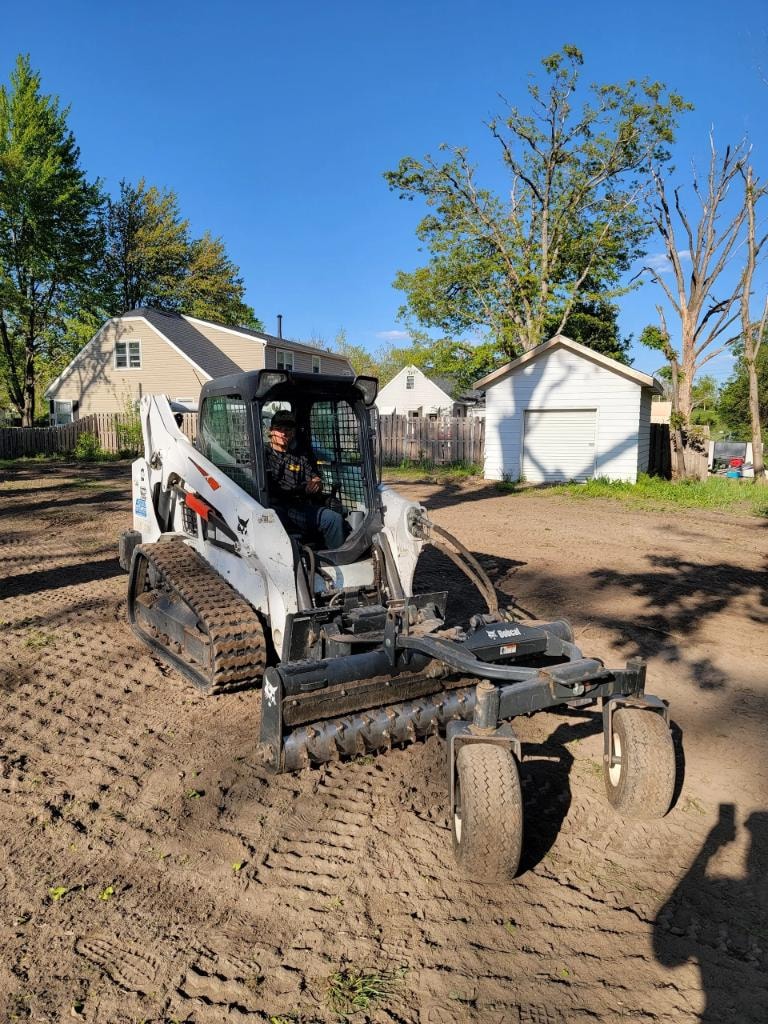
Soil Preparation and Lawn Leveling
Grading and soil amendment for bare or uneven areas before seeding or sodding. Proper soil preparation is the foundation of any successful restoration.
Our Lawn Restoration Process
Lawn Assessment
We evaluate grass coverage, bare spots, soil condition, and the likely causes of damage. If an underlying issue — drainage, pests, disease — is contributing to the problem, we'll identify it before recommending a plan.
Lawn Preparation
Depending on the condition of your lawn, preparation may include aeration, dethatching, grading, topsoil application, or soil amendment to create the best possible seedbed.
Seeding or Turf Installation
We apply suitable grass seed for eastern Iowa conditions — or install sod — based on the restoration plan. Grass species selection matters: we use varieties suited to your lawn's sun exposure, soil type, and use.
Establishment and Aftercare
New grass needs consistent moisture and careful mowing to establish. We provide specific watering schedules, mowing guidelines, and follow-up care instructions so your investment takes hold.
Best Time to Restore Your Lawn in Eastern Iowa
Timing is one of the most important factors in a successful lawn restoration. In Cedar Rapids and eastern Iowa, late summer through early fall — typically mid-August through September — is generally the strongest window for seeding cool-season grasses like Kentucky bluegrass and tall fescue. Cooler temperatures, more reliable moisture, and reduced weed competition give new seed the best chance to establish before winter.
Spring is a workable option for bare spot repairs and some renovation projects, but summer heat and weed pressure can make establishment more challenging. If your lawn struggled through a dry summer, it's worth assessing the damage in late August before deciding whether to seed immediately or wait for fall conditions.
The right timing depends on your grass species, the extent of the damage, and how much preparation is needed. Contact us for an assessment and we'll recommend the best approach for your lawn's specific situation.
Add-On Services
Core Aeration
Relieve compaction and improve seed-to-soil contact before overseeding.
Dethatching / Power Raking
Remove excess thatch buildup that's blocking water, air, and seed from reaching the soil.
Topsoil Application
Add quality topsoil to low spots, bare areas, or thin soil profiles before seeding.
Lawn Leveling
Grade uneven areas for better drainage and a more uniform surface.
Starter Fertilizer
Apply a starter fertilizer at seeding to support early root development and establishment.
Follow-Up Lawn Maintenance
Keep your restored lawn on track with scheduled mowing, fertilization, and seasonal care.
Serving Cedar Rapids & Surrounding Communities
Ready to Restore Your Lawn?
Get an honest assessment and a restoration plan tailored to your lawn's condition. No pressure — just straight answers about what your lawn needs.
Request a Free Assessment